The biggest question/concern I’ve heard from writers recently involves which point of view (POV) is right for what they are working on. There was a time when it would rarely be asked. The default was third person, usually limited. In most cases, it was all a publisher would except for some genres. Industry changes have tossed that right out the window, but all of the options confuse writers that are newer or that don’t have a story that automatically tells them which POV is best. The question has come up so often that I decided to do a short series on the matter. It is the most important decision an author will make because it is central to the dramatization of the story. I’m going to start today with an overview of POV types, some common mistakes, and pros and cons of the most common POV types. 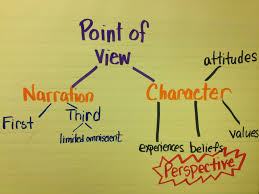 Let me say at this point that when people talk about point of view, there are two things they are referring to: The type of narration that is being used OR the character that is being focused on at any time. Typically the narrative POV will stay the same from the beginning to the end of any story. However, the POV character can be different from scene to scene, even in first person narrative. For the record, I am referring to both. First, a list of POV types:
- First person – The “I” POV
- Third person – “He” or “She”
- Omniscient – This is where the narrator plays God and can see into the heads of all characters
- Wide pan (aka Objective) – All the action and dialogue is seen but none of the internal. Think of a wide shot in a movie.
- Limited – Focuses on one character at a time.
- These are uncommon and can be in first or third person
- Roving – A form of omniscient where the focus shifts from character to character without reason or warning.
- Revolving – A form of omniscient or limited where the focus shifts between several characters in a very distinct order. This can be cool if done right.
- Unreliable narrator – Usually in first person to capitalize on the limitations of it, but this is where the character has compromised credibility. Many times they are lying or withholding information in order to deceive the reader. Or sometimes they are mentally unstable.
- These last two are rarely seen in fiction, but they have some good uses.
- Second person – “You” is the subject.
- First person plural – “We”, as in “We the people…”
It is important to note here that third person limited is still the preferred POV of most readers and publishers. The reason is that it is difficult to do first person well. Also, a writer should stick to one POV per scene with no head-hopping. There is a workaround to that when using third person which I will address later.
Common POV Errors
- One error that occurs often is when an author accidently steps out of a POV to see something that shouldn’t be seen. He crept up behind me slowly on tip toes holding the bat high above his head.
- Sometimes you are in the POV of one character, but you describe
 what another is thinking. Mary watched in fear as his face went blank. He counted back the number of months in his head and quickly realized she was lying. In that example, Mary is the viewpoint character, so you see the problem, right?
 - Switching from one POV type to another in the middle of a manuscript. Look at the two points made above. Notice that I switched from third person to second? In instructional writing, second person comes naturally to a writer and sounds better to a reader, but I started this post purposely in third person to demonstrate this exact point. If you are not writing in the POV that is best suited for your style and purpose, you are going to slip up several times during the first draft and it is not always an easy fix.
- Here is a mistake that will flag you as a novice: Often we try to get around the “psychic ability” challenge by using words and phrases like clearly, apparently, I could tell, he appeared, he must have, and many variations. It takes a lot of practice to learn how to a) believe that your reader can pick it up through your ability to, b) show the thoughts through the other characters words and actions.
Pros and Cons of Different POV Types
First Person
- Feels natural to many writers.
- You only have to deal with one character’s mind.
- Creates a distinctive, strong voice.
- Allows the reader to develop a connection to the character.
- Limited to only the things that this character can see and know.
- You will have to leave out events they are not there for.
Second Person
- Meant to be either conversational or instructional. Gets the point across to the reader very well.
- If you try it in fiction and are successful, you are automatically labeled as a literary rock star.
- Feels odd to the reader in long works.
Third Person Omniscient
- You may enter anyone’s mind.
- You can quickly and easily move from character to character and place to place.
- Each voice must be distinctive.
- You run the risk of narrating as the author.
- It can interrupt the story’s flow.
- It’s confusing as hell.
- You may be labeled a lazy writer.
Third Person Limited
- Preferred over all others.
- You can get really deep into one character’s head and let the reader experience everything happening through them.
- Using more than one POV per scene or chapter is called head-hopping and it’s a big no-no.
- There are no other real cons to this type which is why it is preferred.
Third Person Wide Pan (Objective)
- You may use wide pan as a workaround to head-hopping if you do it properly (I will discuss how to do this in Part Three of this POV series). This is the only real benefit of using wide pan. Otherwise…
- It feels cold.
- You can never show the internal thoughts of any of the characters.
Work it out
Take the example sentence from above: Mary watched in fear as his face went blank. He counted back the number of months in his head and quickly realized she was lying. Mary just told her husband, Scott, that she is pregnant. The only problem is that he was on a long business trip overseas during the time that she would have conceived. Take that scenario and try writing about it using various types of POVs. Then come back and let us know which one felt right to you. Which flowed better? Was there a character you connected with more than the other? And did the POV type that you used have any effect on that?
Discover more from Author Tasha L. Driver
Subscribe to get the latest posts sent to your email.

One Comment Add yours